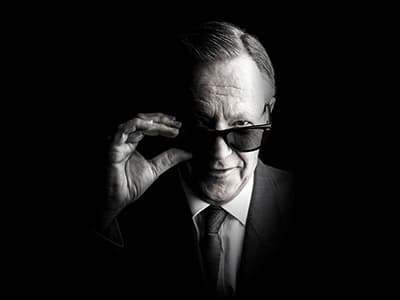
 Left – Josh Quong Tart. Photo – John Marmaras
Although there have been many fictionalised retellings of the life of Oscar Wilde, there can surely be no more appropriate medium than theatre to portray the story of the deeply dramatic unravelling of his life immediately before and after being put on trial for “gross indecency” and subsequently gaoled and ruined, both socially and financially. David Hare’s 1998 drama acts somewhat in counterpoint to Moisés Kaufman’s contemporaneous play Gross Indecency: The Three Trials of Oscar Wilde, which uses verbatim theatre techniques to dramatise the famous court proceedings themselves. By contrast, Hare’s play sets its action in the private moments of despair and interpersonal conflict outside the courtroom, rather than concerning itself with the more public details of his downfall.
The play is divided into two acts, which are each more or less a single long scene of realtime conversations (although the latter includes a time-lapse), allowing in both cases for the slow buildup of some truly ferocious dramatic tension and altogether tragic dénouements. Act One takes place on the night of Wilde’s arrest, opening first on servants at the Cadogen Hotel and then the embattled playwright’s closest confidants, who argue over their differing opinions and agendas about the best course of action for their friend, in anticipation of his arrival.
When Wilde himself finally takes the stage, we are well and truly primed for his presence, both by our metaknowledge of his legendary wit and tribulations, and by the fierce arguments by his nearest, and very much opposed, companions. One is Robert Ross, the playwright’s first male lover, steadfast friend, and posthumous literary executor, who is deeply concerned that the famous figure is acting against his best interests, while the other is the writer’s current lover Lord Alfred Douglas, better known as Bosie. As anyone familiar with Oscar Wilde’s biography will know, Bosie is in many respects the villain of the piece, having pursued a grudge against his own father the Marquess of Queensberry by persuading his much older lover to bring a lawsuit of libel over accusations of sodomy. The failure of the suit, immediately prior to the events of this play, lead to criminal charges being brought against Wilde. Meeting in a discreet hotel frequented in the past for homosexual assignations, Robert desperately tries to convince Wilde to flee the country before he can be arrested, while Bosie selfishly tries to manipulate him into staying, with false assurances that he could prevail in a pending criminal trial.
The tug-of-war between these former and current lovers over what Wilde’s best course of action should be brings to the fore much about their own essential underlying motivations and personalities, while in the eye of the storm the object of their dispute gets progressively drunker and seemingly more capricious. Gripped with an apparent fatalism and indecision, the man famous for his wit and wordplay makes many darkly humorous pronouncements and half-heartedly attempts to mediate his friends’ arguments as they vie for his ear. Clearly though, Wilde’s mind is often elsewhere, and his apparent immunity to the passions of their pleas starts to become unnerving as he lists towards apathy.
The second act jumps ahead two years, and in stark contrast to the sumptuous elegance of London’s furnishings, this former toast of the English theatre and his aristocratic young lover have reunited amidst the stark simplicity and encroaching squalor of poverty in Naples. In the interim, Wilde has endured criminal conviction leading to a physically debilitating stint in prison, and is now penniless and exiled from society, at war with his estranged wife and only source of income. Free from incarceration but in many respects feeling more trapped than ever, Wilde is virtually a broken man, and his renewed relationship with the eternally self-centred Bosie is very much on the rocks. An unexpected visit from an almost equally impoverished Robert (himself rendered notorious by association) with news from England lifts the barely-congealed scabs off some all-too-open wounds, and the tragic consequences for these three men are positively volcanic.
This is a stunning play. Hare vividly imagines the interior emotional lives of these historic figures and the infamous public airing of their scandal, choosing to focus on two key moments of “downfall” in Oscar Wilde’s life which took place outside of the public spotlight. Deftly constructing sustained dramatic scenes that explore these characters, whilst at the same time laying the groundwork for their respective moments of narrative climax when points of decision are borne out of emotional breakthrough, Hare is in rare form. This is a very intimate play, concerning themes of love and betrayal, identity and reputation, truth and self-deception, as well as a lot of raw feelings barely contained behind the veneer of British reserve and sparkling witticisms.
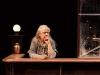
Such intimacy lends itself wonderfully to this staging in the tiny Old Fitz theatre, leading to many breathtaking moments of tense emotion whereby the actors can perform with such subtlety that from the front row you may find yourself mesmerised. This is often by something as subtle as a moment of performance in which all that is moving is the literal quivering of an actor’s eye, awash with suppressed anguish. The production is simple but highly effective, with a lavish set representing the fancy hotel room in Act One giving way to an almost expressionistic simplicity in Act Two, with stark white surfaces representing Oscar and Bosie’s humble residence in Naples.
Veteran director Iain Sinclair does an excellent job marshalling his fine cast of actors, from the minor roles up to the principal trio, and is blessed with a talented ensemble. Josh Quong Tart is superb as Oscar Wilde, a daunting role to say the least, and no less so given his lesser resemblance to the famous historical figure than that which some prior interpreters on stage and screen have been fortunate to possess. Quong Tart excels here, capturing the wryness and eloquence of the great wordsmith admirably, but perhaps most impressively giving the role an abundance of different shades of emotion, as this complicated man fractures under the pressure of his life breaking apart not once, but twice. It is a wonderful part to play, not only for giving the actor a chance to bring this indelible historical figure to life. It also affords the performer a lot to work with, given Hare’s conception of the man as deeply flawed and complex, his self-destructive impulses inextricably bound up with his poetic conception of the world.
Hayden Maher is chilling as Bosie, every inch the petulant man-child forever throwing toys out of his gilded cradle when the preceding tantrums are ignored, forever determined to make everyone else’s misery and importance secondary to trumpeting his own. Although Hare does little to make the character in any way sympathetic, Maher does manage to embody this almost psychotically selfish young man as a relatively credible human being, despite his seemingly fathomless wellspring of bile and practically onanistic egotism. Bosie would be the proverbial character “you love to hate”, were he not so painfully real in his portrayal here, and his actions largely a matter of historical fact.
Possibly most impressive in the cast though is Simon London, despite having the somewhat thankless role of Robert, the much put-upon, abused, and frequently ignored old friend and former lover who repeatedly tries and fails to guide Wilde towards pragmatic solutions to his often self-inflicted woes. While in the first half of the play he comes across as a largely frustrated if touching figure, in the second act his character becomes more palpably tragic. His desperation over and incomprehension of Wilde’s life choices serve to give us insight in turn, regarding Robert’s own inner life, and it is clearly an unhappy one. It is a character rich with subtle pathos, and London delivers an equally subtle performance, often saying more with a glance or shift in his posture than the elegant and emotive lines with which Hare’s script has furnished him.
A gripping production of a superb play, The Judas Kiss is not to be missed.
Red Line Productions in association with Sydney Gay and Lesbian Mardi Gras presents
THE JUDAS KISS
by David Hare
Director Iain Sinclair
Venue: Old Fitz Theatre, 129 Dowling Street (Cnr Cathedral Street), Woolloomooloo
Dates: 15 February – 11 March 2017
Tickets: $42 – $30
Bookings: www.redlineproductions.com.au